Description
Executive Summary
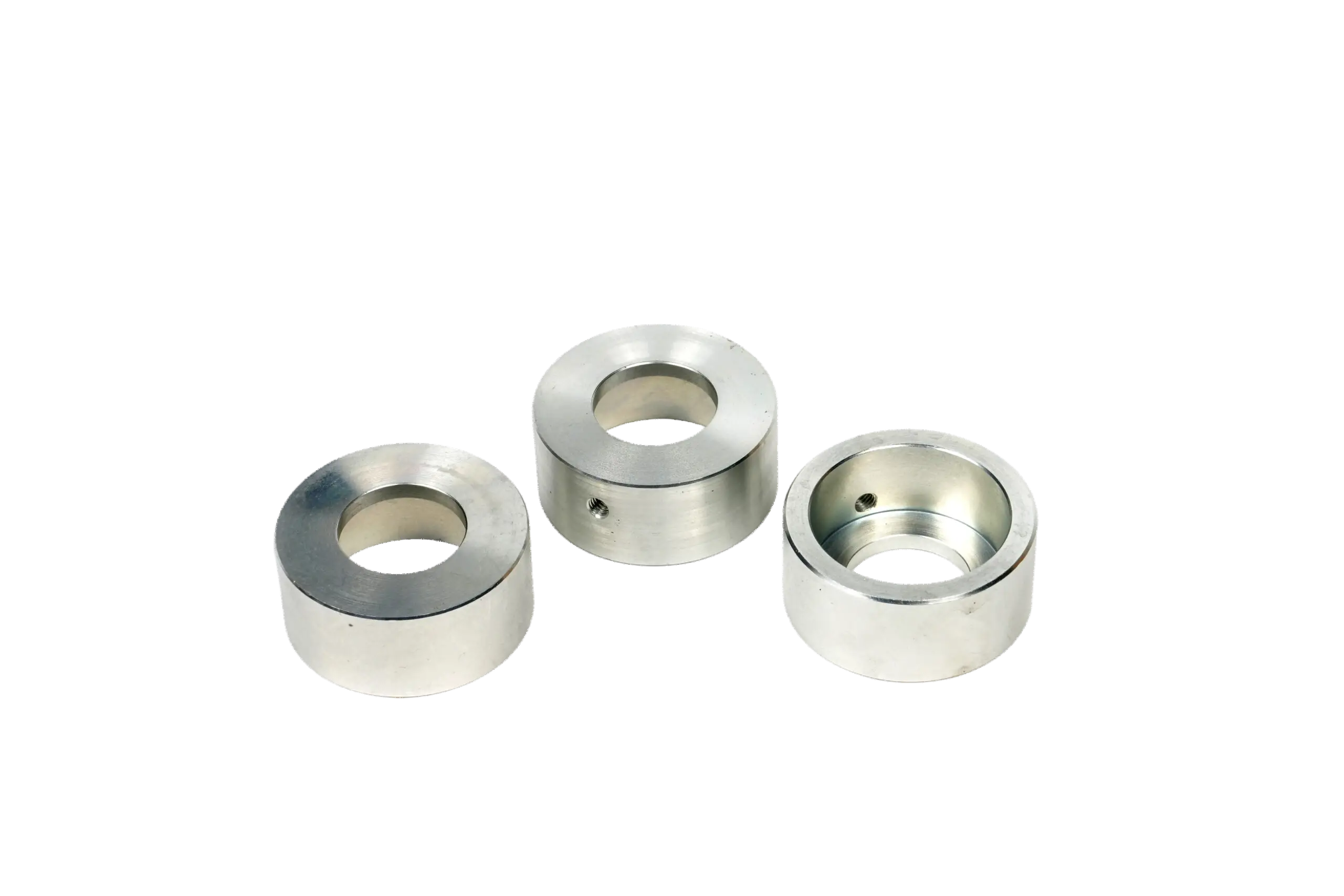
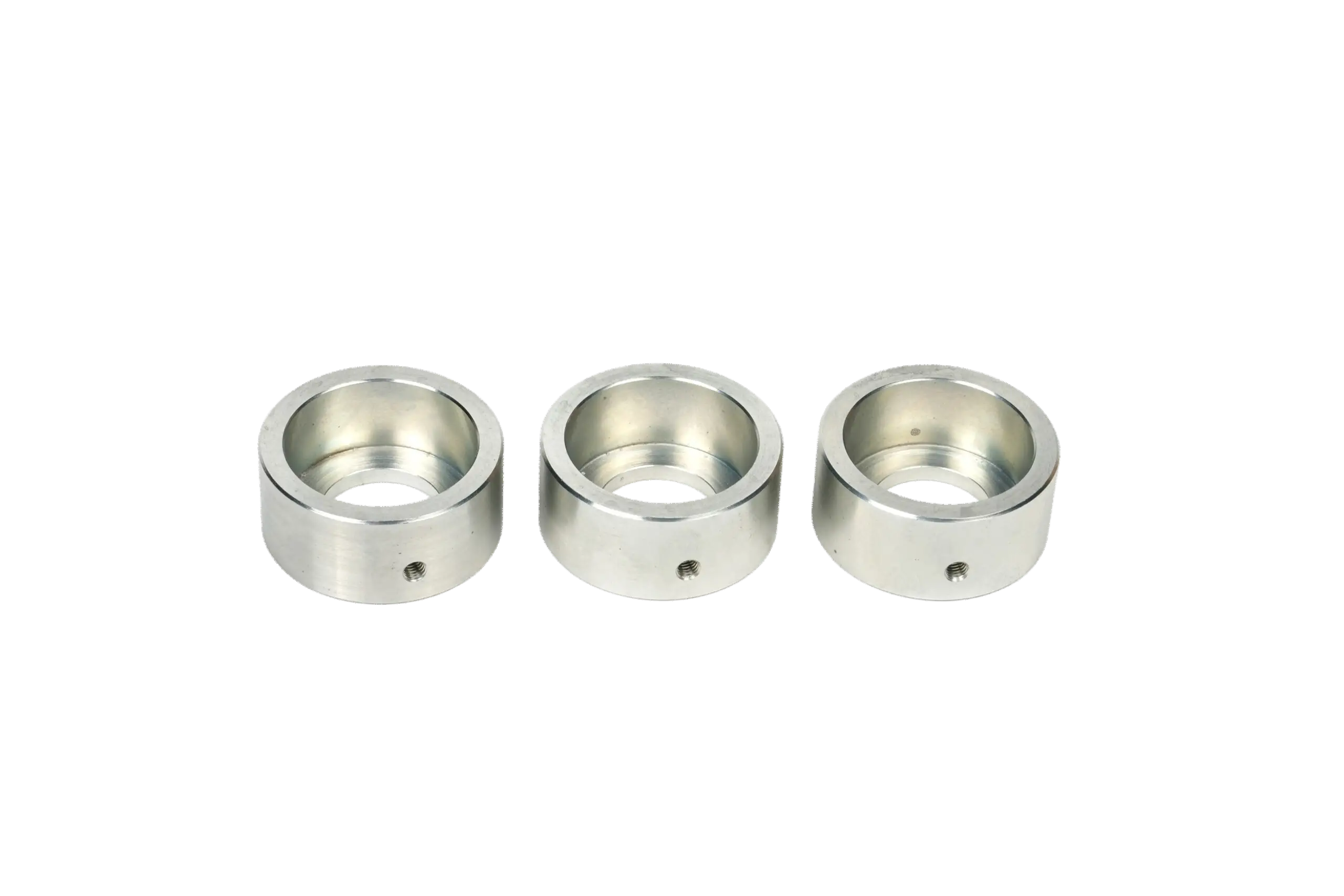
In the intricate world of mechanical assembly, from aerospace frames to high-performance electronics, the smallest components often carry the greatest responsibility for precision and reliability. Precision Aluminum Spacers are fundamental hardware elements designed to create exact gaps, maintain precise alignment, and manage thermal and electrical isolation between parts. Choosing the right Precision Aluminum Spacers Manufacturers is a critical decision that impacts product integrity, manufacturing efficiency, and long-term performance. This guide details the engineering specifications, material benefits, and selection criteria for these components, providing a framework for identifying manufacturers who deliver not just parts, but certified precision and expertise.
1. The Critical Role of Precision Spacers in Modern Engineering
A spacer is a simple cylindrical component, but its function is complex. Precision Aluminum Spacers are used to:
-
Establish Exact Distance: Create a defined, repeatable gap between two components, such as between circuit boards, gear assemblies, or within structural frameworks.
-
Ensure Proper Alignment: Act as a guide for fasteners, ensuring bolts or screws align perfectly through multiple layers, preventing shear stress and misalignment.
-
Manage Heat & Electricity: Aluminum’s excellent thermal conductivity helps dissipate heat, while anodized coatings can provide electrical insulation.
-
Reduce Weight & Prevent Galling: Aluminum offers a superior strength-to-weight ratio compared to steel and is non-galling, making it ideal for applications where weight savings and ease of disassembly are priorities.
In industries like aerospace, automotive, robotics, and telecommunications, a spacer that is even a few thousandths of an inch out of tolerance can cause assembly issues, product failure, or safety concerns.
2. Material Science & Advantages of Aluminum Alloys
Not all aluminum is equal. Reputable manufacturers utilize specific, certified alloys to meet engineering demands.
-
Common Alloys: 6061-T6 is the industry workhorse, offering an excellent balance of strength, machinability, and corrosion resistance. 2024-T3 provides higher strength (though lower corrosion resistance), and 7075-T6 is used for the highest strength-to-weight applications.
-
Key Benefits:
-
High Strength-to-Weight Ratio: Critical for weight-sensitive applications in aerospace and automotive sectors.
-
Excellent Corrosion Resistance: Especially when treated with protective finishes like anodizing.
-
Superior Machinability: Allows for the creation of complex features (e.g., undercuts, internal threads, tight tolerances) with excellent surface finishes.
-
Thermal & Electrical Properties: Naturally thermally conductive and can be anodized to become an effective electrical insulator.
-
Non-Magnetic & Non-Sparking: Essential for sensitive electronic or hazardous environments.
-
3. Hallmarks of Precision Manufacturing
The term “precision” is defined by specific, measurable manufacturing capabilities:
-
Tight Diametric & Length Tolerances: True precision manufacturers hold tolerances to ±0.0005 inches (±0.0127 mm) or tighter on critical dimensions. This is achieved through advanced CNC (Computer Numerical Control) turning and grinding.
-
Exceptional Concentricity & Parallelism: The inside diameter (ID) and outside diameter (OD) must be perfectly concentric, and the faces must be parallel to prevent tilting under load.
-
Superior Surface Finish: A smooth, consistent surface finish (often specified as an Ra value) is crucial for both functional performance and aesthetic quality. Deburring is meticulous.
-
Advanced Secondary Processing:
-
Anodizing: Provides a hard, wear-resistant, and corrosion-resistant surface. Available in many colors (e.g., clear, black, red) for color-coding or branding.
-
Threading: Precision-cut internal (female) or external (male) threads to high-class standards (e.g., Class 3A/3B).
-
Heat Treatment: To achieve specific tempers (like T6) that guarantee material properties.
-
4. Industry Applications: Where Precision is Non-Negotiable
-
Aerospace & Aviation: In airframe assembly, engine components, and avionics racks, where lightweight, reliable, and certified parts are mandatory.
-
Defense & Military Electronics: For radar systems, communication devices, and weapon systems requiring vibration resistance and reliability.
-
Semiconductor & Medical Equipment: In wafer handling robots and medical imaging devices, where ultra-cleanliness and non-contaminating materials are required.
-
Automotive (Performance & EV): In engine assemblies, battery packs, and sensor mounts, managing heat and ensuring alignment in high-vibration environments.
-
Telecommunications & Robotics: For aligning sensitive optical components and creating rigid, lightweight frames for robotic arms.
5. Manufacturer Evaluation Framework: Your Checklist for Partnership
Choosing the right Precision Aluminum Spacers Manufacturers is a partnership. Use this framework to assess potential suppliers:
| Evaluation Criteria | Key Indicators & Questions for the Manufacturer | Impact on Your Product Quality |
|---|---|---|
| Engineering & Design Support | Do they offer CAD/CAM services and DFM (Design for Manufacturability) analysis? Can they provide material recommendations? | Prevents design flaws, optimizes part cost, and ensures the spacer functions as intended in your assembly. |
| Quality Certifications & Processes | Are they ISO 9001:2015 certified? What in-process inspections (e.g., SPC, CMM reports) do they provide? Do they offer material certifications? | Certifications and documented processes are objective proof of a commitment to consistent, traceable quality. |
| Technical Capabilities | What is their standard tolerance capability? What CNC equipment do they use? Do they have in-house anodizing and finishing? | Determines if they can actually produce the precision you specify and control the entire manufacturing chain. |
| Industry Experience & Specialization | Do they have case studies or testimonials from your industry (e.g., aerospace, medical)? | Demonstrates understanding of your specific regulatory, performance, and documentation requirements. |
| Prototyping & Volume Scalability | Can they deliver quick-turn prototypes for testing? What is their capacity for high-volume production with consistency? | Enables design validation and ensures the supplier can grow with your production needs without quality loss. |
6. The Cost of Precision: Understanding Value Beyond Unit Price
While unit cost is a factor, the total cost of ownership (TCO) for precision spacers is more revealing:
-
Reduced Assembly Time & Rework: Perfectly in-spec spacers fit the first time, eliminating labor wasted on forcing, modifying, or rejecting bad parts.
-
Enhanced Product Performance & Reliability: Precision components lead to better-aligned, more reliable end products with fewer field failures and warranty claims.
-
Supply Chain Reliability: A manufacturer with robust quality systems delivers consistent parts batch after batch, preventing production line stoppages.
7. Conclusion: Precision as a Strategic Component
Precision Aluminum Spacers are not commodities; they are engineered components that play a vital role in the form, fit, and function of advanced products. Selecting a manufacturer based solely on price often leads to hidden costs in assembly, performance, and reputation.
Investing in a partnership with a certified, technically proficient manufacturer ensures you receive components that are a perfect foundation for your own product’s excellence. It is a strategic decision that safeguards quality, optimizes manufacturing, and delivers peace of mind.
Ready to source precision spacers for your critical application?
For detailed technical specifications, material data sheets, and to request a quote for custom or standard precision aluminum spacers, please visit the official product page:
Precision Aluminum Spacers – Dongpei
We recommend initiating a conversation with their engineering team to discuss your specific tolerance, material, and finishing requirements.