CNC machining quotes can sometimes surprise buyers—but in most cases, costs are not determined by the machining itself, but by design decisions made long before the machine begins cutting. Here are some practical ways to reduce CNC machining costs while maintaining quality.
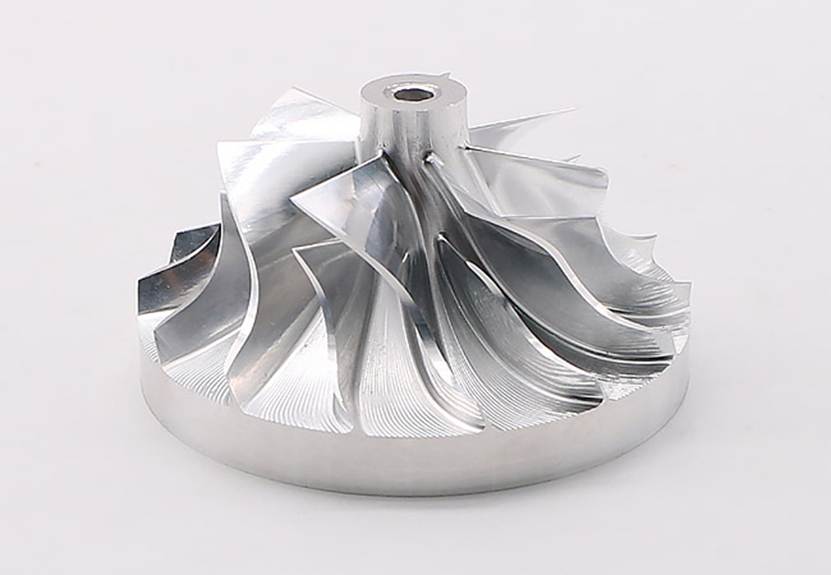
1. Design Around Standard Tools
Machining internal angles with sharp edges requires small tools that are slow-cutting and prone to breakage. Use corner radii of at least 3 mm (or 1/8 inch) whenever possible so that standard end mills can operate at full speed. The same principle applies to hole machining: stick to standard drill diameters and avoid drilling holes deeper than four times the diameter unless absolutely necessary.
2. Choose Machinable Materials
Material selection can vary quotes by 3-5 times. Free-cutting alloys—such as 6061 aluminum, brass, and 1215 steel—have high cutting speeds and slow tool wear. Titanium and hardened stainless steel have slow cutting speeds and high tool wear, increasing costs and delivery times. Unless the application truly requires a special alloy, switching from 7075 aluminum alloy to 6061 aluminum alloy, or from 316 stainless steel to 304 stainless steel, is usually the best way to save costs.
3. Tolerances: Apply only to critical areas
Strict tolerances are not only difficult to achieve, but also very costly to verify. Specifying a tolerance of ±0.005 mm on every feature increases inspection time and scrap rates. Apply critical tolerances only to functional surfaces (e.g., bearing housings, sealing surfaces, etc.). Mating holes have lower precision requirements; other dimensions should maintain general tolerances (±0.1 mm). This alone can reduce machining costs by 15%–25%.
4. Keep parts easy to clamp
Parts that are easy to clamp have lower machining costs. Add clamping functionality or include a lug for later removal. When designing parts, minimize the number of clamping operations to machine multiple features—each additional clamping operation increases cost and accumulates tolerance errors.
5. Order the Appropriate Quantity
The clamping cost of CNC machining is essentially fixed, so it can be spread across your bulk orders. The unit price typically decreases by 30%–40% from 1 to 10 pieces, and again from 50 to 100 pieces. If your project eventually requires more parts, ordering a batch of transitional production parts at once is much more cost-effective than remachining the prototypes one by one.
6. Use Mill-Turn Machining
Round parts with milled features (planes, slots, cross holes) are ideally suited for mill-turn machining centers. Machining can be completed in a single clamping, avoiding secondary machining, alignment errors, and handling operations.
7. Reduce Surface Finish Requirements (Unless Appearance is Important)
Ra 0.8 or mirror polishing is expensive. For internal, non-exterior surfaces, a machined surface finish is almost always sufficient.
Quick Cost Savings Checklist
- Corner radius ≥ 3 mm
- Use only standard hole diameters
- Use critical tolerances only on functional surfaces
- Use 6061 aluminum alloy instead of 7075 aluminum alloy, where strength allows
- Order in bulk of 10 pieces or more instead of a single order
- Use machined surface finishes for non-surface surfaces
Conclusion The most economical CNC parts come from designs that conform to the actual cutting methods of the material. Send us your CAD files for a free DFM assessment—our engineers will pinpoint exactly where costs can be reduced without compromising quality and respond with an optimized quote within 24 hours.
Keyword