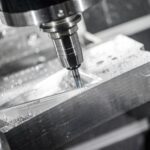
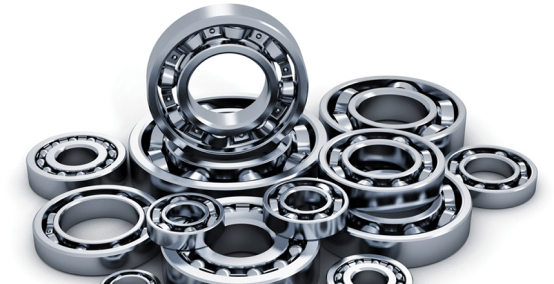
Dongpei Company customized CNC milling components can process any machinable material, from simple flat parts to complex irregular parts. It is suitable for everything from small precision parts to large mechanical components, making it one of the most versatile machining processes in the manufacturing industry.
Based on part structure, processing scenarios, and industry needs, CNC milling components are divided into 6 common types, covering most application scenarios:
1. Simple Basic Structural Parts (Entry-level, most common)
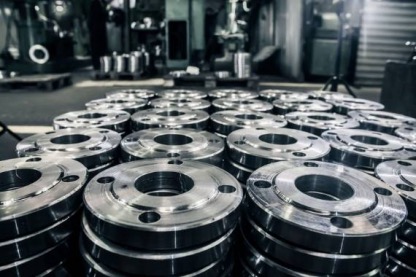
Mainly features flat surfaces, holes, and simple grooves. These are basic components for various industries, with low processing difficulty and high mass production capabilities. Examples include: flanges, connecting plates, bases, and brackets for mechanical connections; panels and covers for equipment; and gaskets and square parts for hardware.
2. Shaft/Sleeve Precision Parts (Requires precise dimensions, without significantly complex contours)
Mainly cylindrical and square shapes, with steps, keyways, and round/threaded holes. The core focus is ensuring concentricity and dimensional tolerances. Examples include: drive shafts, stepped shafts, and spline shafts for motors/reducers; bushings, shaft sleeves, and sleeves for equipment; and screws and nut seats for hardware.
3. Box/Housing Structural Parts (Multi-surface machining, with internal cavities/hole systems, load-bearing type)
The overall shape is box-like or housing-like, with multiple machined surfaces, dense hole patterns, internal cavities, and grooves. These are the “supporting core” of equipment, suitable for horizontal/gantry CNC milling. Examples include: spindle boxes and feed boxes for machine tools; valve bodies, pump bodies, and cylinder bodies for hydraulic/pneumatic equipment; and battery casings and motor housings for new energy equipment.
4. Complex Irregular/Curved Parts (High-end, achieved through programming, impossible to do manually)
Features irregular 3D curved surfaces, curved contours, and irregular grooves, without a fixed regular shape. The core process relies on computer-planned tool paths, which is a specialty of CNC milling. For example: impellers, blades, and guide vanes for aerospace applications; mold cavities, cores, and inserts for molds; interior brackets and irregularly shaped connectors for automobiles; and bionic components and precision irregular heads for medical devices.
5. Precision small parts (micromachining, requiring ultra-high precision and small size)
Small in size (a few millimeters to tens of millimeters), with extremely strict tolerance requirements, mainly focusing on fine holes, micro-grooves, and small contours, suitable for precision milling with small-diameter tools. For example: connectors, terminal blocks, and chip heat sinks for electronic equipment; surgical instrument parts and miniature sensor parts for medical devices; and small gears and shafts for watches/precision instruments.
6. Large/heavy mechanical components (large size, load-bearing type, processed by large equipment)
Large in size and heavy in weight, mainly focusing on large flat surfaces, large holes, and simple contours, requiring gantry CNC milling machines for processing. These are core components of heavy industry and large equipment. For example: machine tool beds and worktables; frame connecting plates and large brackets for construction machinery; and large flanges and load-bearing bases for metallurgical equipment.
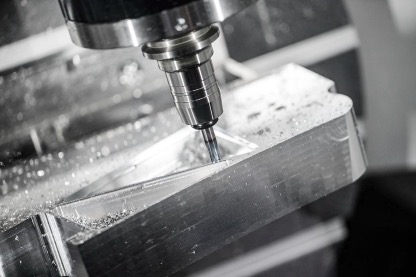
Supplement: Core processed parts in various industries (categorized by field)
- Automotive/New Energy: Chassis parts, motor housings, battery brackets, irregularly shaped connectors, wheel hub parts
- Aerospace: Impellers, blades, aviation connectors, airframe components, precision fasteners
- Medical Devices: Surgical instrument parts, medical equipment bases, bionic parts, precision testing accessories
- Electronics/3C: Connectors, heat sinks, housing parts, precision brackets, terminal blocks
- General Machinery: Reducer parts, pump bodies/valve bodies, flanges, drive shafts, equipment frames
- Mold Manufacturing: Mold cores, cavities, inserts, and templates for injection molds/stamping dies
Simple summary: Except for special parts that are ultra-long, ultra-thin, and easily deformed, most industrial parts can be processed by CNC milling. The more complex the part, the higher the precision requirements, and the larger the batch size, the more the advantages of CNC milling are highlighted.
Keyword:
cnc milling components Manufacturers
Customized cnc milling components