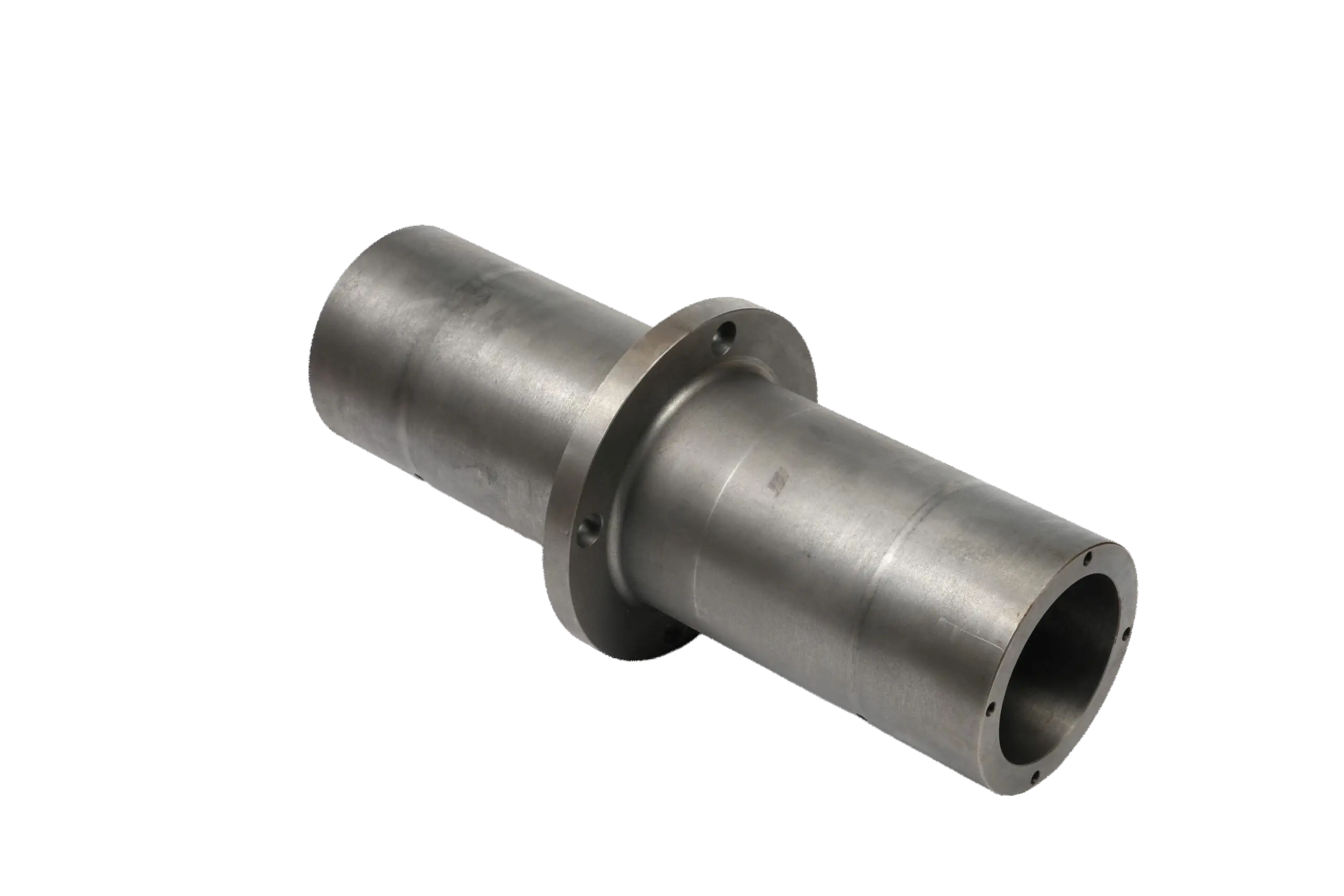
Customized Dual Groove Pulley

Customized Dual Groove Pulley

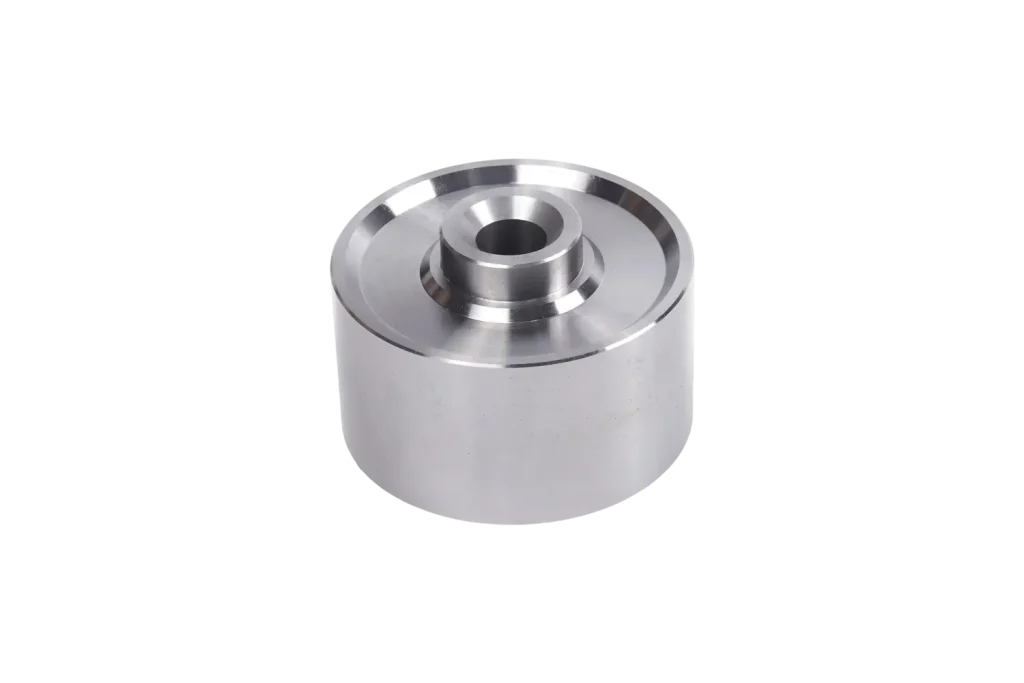
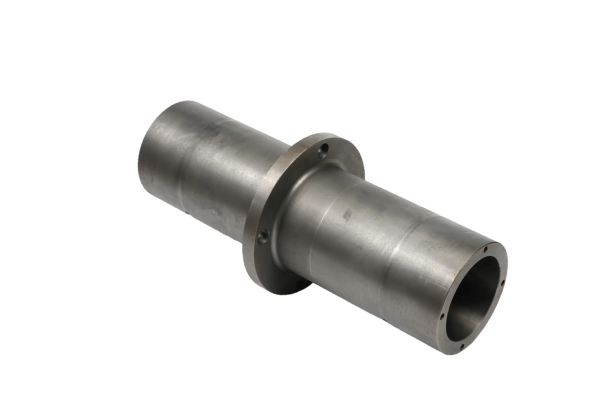
When it comes to performance-driven mechanics, few components match the precision and reliability of the dual-groove pulley from Ningbo Dongpei Machinery Co., Ltd. Combining cutting-edge design with superior materials, this pulley stands as a benchmark in industrial engineering. Whether it’s handling the rigors of high-speed rotations or torque-intensive applications, this product delivers unmatched durability and efficiency that redefine expectations of reliability in demanding environments. The dual-groove pulley is crafted from premium-grade cast iron, renowned for its tensile strength and resistance to wear. This choice of material ensures that it can endure the stresses of high-speed rotations, making it a versatile piece suitable for applications across a wide spectrum of industries, including mining couplings, wind power machinery, and OEM customized parts. With a sleek dark metallic finish, the pulley is more than just functional—it’s a visual representation of its high-quality engineering. Ningbo Shelley Machinery’s emphasis on exceptional quality control guarantees that every pulley meets exacting standards. This product uses a dual-groove design, which not only enhances functionality but also provides versatility. Precisely machined grooves to accommodate V-belts which can reduce slippage, play a crucial role in automotive systems and industrial equipment.The inner bore of the pulley is engineered with remarkable precision, featuring exact tolerances that facilitate seamless compatibility with shafts and hubs. With over two decades of expertise, Dongpei Machinery has established itself as a leader in OEM customization and mechanical engineering.The company prides itself in rigorous factory audits, unparalleled quality control, and prompt customer service. Products like this dual-groove pulley reflect their commitment to creating industrial solutions that truly excel.

Share on:

leave a message:

Description

1. Introduction: The Power of Customization in Drive Design

In the world of industrial machinery, automotive systems, and complex equipment, the efficient transmission of power through belts is a fundamental engineering challenge. A standard pulley often falls short when unique space constraints, specific speed ratios, or the need to drive multiple components from a single source arise. This is where a Customized Dual Groove Pulley becomes an indispensable solution. This specialized component is not an off-the-shelf part but an engineered element designed to meet precise application requirements, offering versatility, space efficiency, and reliable performance in demanding multi-drive scenarios.

2. What is a Customized Dual Groove Pulley?

Customized Dual Groove Pulley is a wheel with two circumferential grooves (channels) on its outer rim, each designed to seat a V-belt, timing belt, or other drive belt. The “customized” aspect means its key parameters are tailored to the specific application:

  • Groove Profiles (Pitch Diameter, Angle, Width): Matched exactly to the belt type (e.g., A, B, SPZ, AT5, HTD) and size required for the intended power transmission.

  • Bore Size & Keyway: Precisely machined to fit the customer’s specific shaft diameter, often including a custom keyway, spline, or set-screw arrangement for a secure, non-slip fit.

  • Overall Dimensions (OD, Width, Flange): Designed to fit within the spatial envelope of the machine, considering clearance and assembly requirements.

  • Material & Construction: Selected based on load, speed, and environment—from cast iron and ductile iron for high strength and damping, to aluminum for weight reduction, or steel for high-precision applications.

3. Key Advantages and Applications

The primary benefit of a dual-groove design is the ability to drive two separate belts—and thus two different loads or machines—from a single power source (like a motor shaft). This offers significant advantages:

  • Space & Cost Efficiency: Eliminates the need for a separate motor, shaft, and mounting hardware for a second driven component, saving valuable space and reducing system cost and complexity.

  • Synchronized or Independent Drives: Allows for driving two components at the same speed (using identical belts/pulleys) or at different speeds (using different pitch diameters on the same pulley).

  • Increased Power Transmission Capacity: In some designs, two belts can be used in parallel to transmit higher torque than a single belt could handle, providing a redundant or reinforced drive path.

  • Design Flexibility: Customization allows engineers to solve unique packaging problems and optimize the entire drive system layout.

Common Applications Include:

  • Industrial Machinery: Driving multiple pumps, fans, or compressors from a single motor.

  • Automotive & Serpentine Accessory Drives: In engines to power the alternator, water pump, power steering pump, and A/C compressor from the crankshaft.

  • Agricultural Equipment: Powering various implements and hydraulic systems from a tractor’s Power Take-Off (PTO).

  • Material Handling Systems: Conveyors and processing lines where multiple sections must be driven synchronously.

  • Custom & OEM Equipment: Any specialized machine requiring a compact, multi-output drive solution.

4. Technical Specifications and Customization Options

When specifying a Customized Dual Groove Pulley, engineers work with the manufacturer to define every critical dimension and feature. A comprehensive specification includes:

1. Groove Specifications (for each groove):

  • Groove Type: V-belt profile (A, B, C, etc.), timing belt pitch (XL, L, H, etc.), or other (Poly-V, round belt).

  • Pitch Diameter: The effective diameter at which the belt rides, which determines the speed ratio.

  • Groove Angle & Depth: Must match the belt cross-section precisely for proper grip and wear.

2. Hub & Bore Specifications:

  • Bore Diameter: The exact inner diameter of the pulley.

  • Keyway Dimensions: Width, depth, and type (e.g., square, woodruff).

  • Set Screw Holes: Number, size, and thread pitch, if applicable.

  • Pilot Diameter: For precise hub-centric mounting.

3. General Construction:

  • Material: Cast Iron (Class 30, 35), Ductile Iron (65-45-12), Aluminum (6061-T6), Steel (1045, 4140).

  • Static/Dynamic Balance: Required for high-speed applications (> 1000 RPM) to prevent vibration. Standards like ISO 1940 G6.3 or G2.5 may be specified.

  • Finish: Machined finish, black oxide, paint, or zinc plating for corrosion protection.

5. The Customization Process: From Concept to Component

Working with a capable manufacturer typically follows these steps:

  1. Application Review: The customer provides drive parameters (horsepower, RPM, center distance), spatial constraints, and performance goals.

  2. Design & Engineering: The manufacturer’s engineers create a CAD model and drawing for approval, recommending optimal groove types, materials, and balance requirements.

  3. Prototyping & Approval: A prototype may be produced for fit-and-function testing in the customer’s assembly.

  4. Production & Certification: Upon approval, the production run is completed. Quality certifications (material certs, inspection reports) are provided.

6. Selection Guide: Partnering with the Right Manufacturer

The success of a custom pulley depends heavily on the manufacturer’s capabilities. Use this checklist to evaluate potential partners:

Evaluation Criteria Key Questions for the Manufacturer Importance to Your Project
Engineering Support Do you provide in-house engineering and CAD design services? Can you perform drive system calculations? Ensures the pulley is designed correctly for your application, not just machined to a print you provide.
Material & Process Expertise What materials do you work with? Do you have foundry partnerships for castings? What balancing equipment do you use? Access to the right materials and processes (casting, machining, balancing) is critical for producing a durable, high-performance part.
Quality Control & Documentation What inspection equipment do you use (CMM, optical comparators)? Can you provide material certifications and final inspection reports? Guarantees the part meets all dimensional and material specifications, providing traceability and quality assurance.
Prototyping & Lead Time Can you produce a quick-turn prototype? What is the lead time for low-volume and production quantities? Allows for design validation and fits your project timeline for development and production ramp-up.
Industry Experience Have you produced similar custom pulleys for applications in my industry (e.g., automotive, industrial machinery)? Demonstrates familiarity with the performance standards and regulatory requirements of your field.

7. Conclusion: Driving Innovation with Custom Solutions

Customized Dual Groove Pulley is a quintessential example of how a tailored mechanical component can solve complex engineering problems, enabling more efficient, compact, and reliable machinery. Moving beyond the limitations of standard catalog parts opens up new possibilities in system design.

Investing in a custom pulley from a manufacturer with strong engineering, precise manufacturing, and rigorous quality control transforms a simple drive component into a key enabler of your product’s performance and innovation.


Disclaimer: This guide provides general information. The design of power transmission components should be undertaken by qualified engineers, considering all applicable safety factors and industry standards.

For detailed design consultation, to request a quote for a custom pulley, or to explore standard options, visit the official product page:
Customized Dual Groove Pulley – Dongpei

Initiating a conversation with the manufacturer’s application engineering team is the most effective first step to developing the optimal solution for your drive system.