Industrial Ball Stud Fastener Suppliers

Industrial Ball Stud Fastener Suppliers

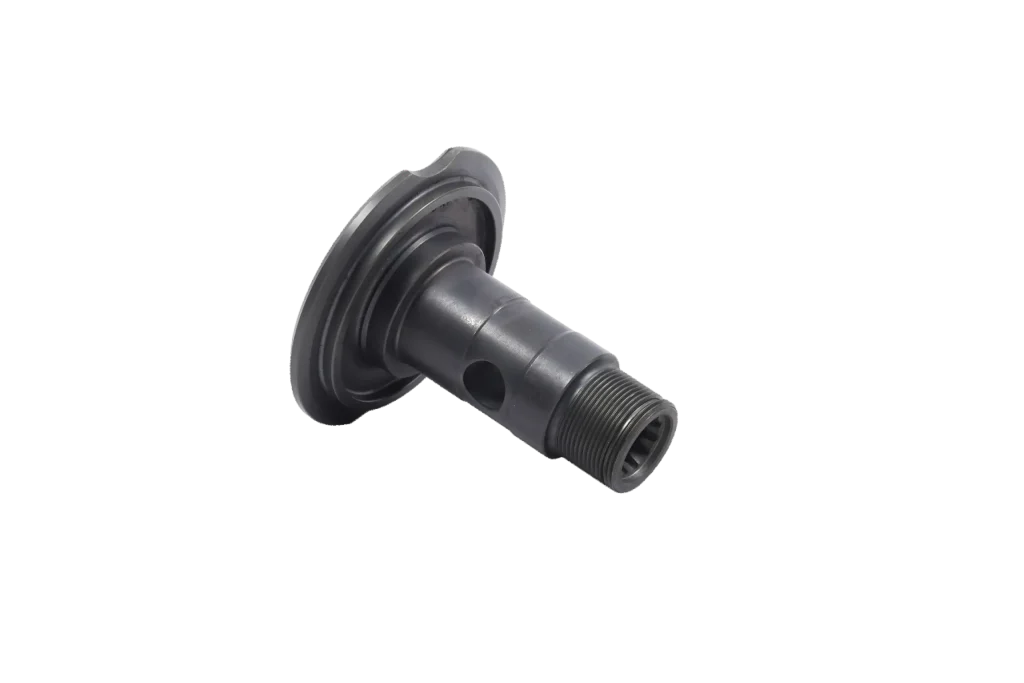
Non-standard hardware fittings have become increasingly essential in today’s technologically advanced world. These unique hardware components stand out for their ability to adapt to unconventional projects and sophisticated systems, which require reliability, precision, and durability. Among these, the **Ball Stud Fastener** takes center stage as a prime example of innovation and excellence. Ningbo Dongpei Machinery’s high-performance ball head bolt fasteners are designed to provide reliable, flexible and durable solutions for complex systems. Precision-made with top-grade corrosion-resistant alloys, they have extraordinary strength and long life, and can easily cope with high pressure, vibration and harsh environments. Innovative dual-core design: 360° universal ball head supports dynamic rotation adjustment, and the reinforced threaded base achieves millimeter-level precise anchoring of metal/composite materials/wood, which is easy to install and prevents loosening. The compact structure combines industrial strength and modern aesthetics in a very small space, perfectly adapting to high-end scenes such as automotive suspension, robotic arm joints, and wind power systems, significantly improving sealing, multi-material compatibility and space utilization. Dongpei Machinery’s core advantages are military-grade quality control (±0.01mm tolerance) and deep customization capabilities: 48-hour rapid response to material/size customization needs, global efficient logistics to ensure on-time delivery, and deep experience in OEM fields such as mining couplings and wind power valves. Choosing Dongpei means choosing innovative technology and worry-free service – contact us now to empower your cutting-edge projects! Jackey Shen (+86-13208095582, marketing@nbdongpei.com)

Share on:

leave a message:

Description

1. Introduction: The Pivot Point of Industrial Motion

In the world of industrial machinery, automotive systems, and heavy equipment, components are rarely rigidly fixed. They need to pivot, articulate, and adjust to varying angles and loads. This is where the Industrial Ball Stud Fastener proves indispensable. This specialized component, featuring a spherical ball on one end and a threaded stud on the other, provides a robust yet flexible connection point for linkages, tie rods, control arms, and joints. Selecting a capable Industrial Ball Stud Fastener Supplier is critical for ensuring the safety, precision, and durability of moving assemblies in demanding environments.

2. Understanding the Industrial Ball Stud Fastener

An Industrial Ball Stud Fastener is a mechanical fastener that enables articulation and multi-axis movement. The spherical ball rotates within a corresponding socket or bearing, allowing for angular misalignment while transmitting force. The threaded stud allows for secure mounting and adjustment. Its reliability is paramount in systems where failure can lead to loss of control, inaccurate positioning, or catastrophic downtime.

Key characteristics that define a high-quality industrial ball stud include:

  • High-Strength Material: Typically forged from alloy steel (e.g., SAE 4140, 8740) and heat-treated to achieve optimal hardness (for the ball) and toughness (for the stud).

  • Precision Ground Spherical Ball: The ball must have a consistent, smooth surface finish and a precise diameter to ensure smooth rotation with minimal play or wear within its housing.

  • Precisely Rolled Threads: The threads must be clean, strong, and to specification to withstand high clamp loads and vibration without stripping.

  • Robust Construction: Designed to handle significant shear and tensile forces, as well as cyclic fatigue from constant articulation.

3. Core Applications Across Industries

These versatile components are found in a vast array of applications:

  • Automotive & Transportation: Steering linkage assemblies, throttle linkages, gear shift mechanisms, and suspension components.

  • Heavy Equipment & Construction: Linkages for hydraulic control valves, lever arms on excavators and loaders, and adjustable linkages in agricultural machinery.

  • Industrial Machinery: Adjustable links in conveyor systems, packaging equipment, and printing presses.

  • Aerospace & Defense: Flight control linkages and other critical motion transfer systems where reliability is non-negotiable.

4. The Critical Role of a Qualified Supplier

The performance of a ball stud is only as good as its manufacturing quality. Partnering with the right Industrial Ball Stud Fastener Supplier ensures you receive components that meet stringent specifications. Key supplier qualifications include:

  • Material Certification & Traceability: The ability to provide Mill Test Reports (MTRs) for raw materials, ensuring proper alloy composition and mechanical properties.

  • Advanced Manufacturing Capabilities: Utilization of processes like cold forging, precision CNC machining, induction hardening, and grinding to achieve required tolerances and surface finishes.

  • Rigorous Quality Control: Implementation of 100% dimensional inspection, hardness testing, and surface defect detection.

  • Engineering Support: Assistance with selecting the correct ball stud grade, size, and finish for your specific application, including custom designs.

  • Consistent Supply Chain: Reliable inventory and production scheduling to meet your demand without interruption.

5. Selection Guide: Specifying the Right Ball Stud Fastener

Choosing the correct ball stud requires careful consideration of your application’s demands. Use this framework to guide your specification:

Selection Criteria Key Parameters & Questions Impact on Performance
Load Requirements What are the primary loads (shear, tensile, fatigue)? What is the required safety factor? Determines the necessary material grade, ball diameter, and stud diameter. Under-sizing leads to failure.
Articulation & Movement What is the required angular range of motion? Is it continuous oscillation or occasional adjustment? Influences the required sphericity of the ball, socket design, and lubrication needs.
Environmental Conditions Will it be exposed to corrosion, extreme temperatures, or contaminants? Dictates the need for protective coatings (e.g., zinc plating, phosphate, chrome) or stainless steel material.
Interface & Assembly What is the thread specification (size, pitch, class)? What is the required wrenching feature (hex, spline)? Ensures compatibility with your existing components and tooling for installation and maintenance.
Regulatory Compliance Are there industry-specific standards to meet (e.g., automotive, aerospace, military specs)? A qualified supplier should be familiar with and able to certify compliance with relevant standards.

6. Conclusion: Secure Your Motion with Confidence

The Industrial Ball Stud Fastener is a deceptively simple component that plays a complex and vital role in mechanical systems. Its failure can disable an entire machine. Therefore, sourcing from a reputable and technically proficient Industrial Ball Stud Fastener Supplier is not a commodity purchase but a strategic investment in your equipment’s reliability and safety.

By prioritizing suppliers with proven metallurgical expertise, precision manufacturing, and a commitment to quality assurance, you ensure that this critical pivot point performs flawlessly under pressure, cycle after cycle.


Disclaimer: This guide provides general information. For specific applications, always consult with qualified engineering personnel and adhere to all relevant OEM specifications and safety standards.

For detailed specifications, material options, and to explore custom manufacturing capabilities, visit the official product page:
Industrial Ball Stud Fastener – Dongpei

Engaging directly with a supplier’s engineering team is the best way to confirm that their product meets the precise demands of your application.